
Why this book
MINARET — An Opening Essay
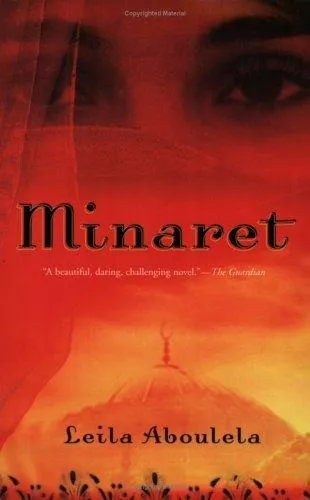
Start where the book starts: a low ceiling, and a minaret. Najwa is in London, in a room that is not hers, and above the rooftops stands a tower she can still see from the window. Two things are true in her at once, and the whole novel lives in the fact that one body can hold them both: a sentence has been passed, and she is still hungry. A father is executed, the money goes, the marriage she was raised for never arrives — and under all of it a wanting keeps on going, unargued-away, undefeated by reason or by shame. If you have ever carried a verdict inside you and still eaten breakfast, still ridden the bus, still wanted something you were no longer allowed to expect, you already know this woman. That is the first reason the book matters: it is not about someone else.
What it gives us that no report can is the texture of a fall nobody announces. A coup in Khartoum in 1989 takes a government; in this book it takes one man, through the family's own gate, opened unhurried by the watchman, in the grammar of routine, while the daughter is looking at her own face in a mirror. Statistics can tell us how many Sudanese left, how many domestic workers in the Gulf and in London are holding passports that are not in their own pockets, how the kafala sponsorship system ties a woman's legal existence to a single employer's signature, how many women from Ethiopia, the Philippines, Sri Lanka and Indonesia keep other people's houses clean. Statistics cannot tell you what it is to read your own faith in the traces left in a room you do not own — an open book, a prayer mat put away and forgotten. Information hands us the fact; the novel hands us the room, the heat, the smell of the floors, and a woman who has learned not to lift her eyes.
Where it sits in history. Sudan went from the Mahdist state to Kitchener's guns at Omdurman in 1898, into the Anglo-Egyptian condominium that ran until independence in 1956, through wars and through the 1983 laws that made religion a matter of state, and then into the coup. Najwa's father is a child of that inheritance: English manners, a government salary, a car with the window rolled up on a hot street. Her privilege is real, and it is borrowed — won inside a colonial system and handed to her with an invoice she will pay later, in another country, in another woman's kitchen. When a schoolmate's white cotton tobe makes a privileged girl feel her own thinness, that is a class noticing its own seams.
And 2005. The novel appeared in the year of the London bombings, in a city already deciding what a covered head meant, before the arguments about the niqab that filled 2006 and the ones that live on now in schools and in the Prevent duty. Read it against that and it refuses every frame offered to it: a woman praying on a bus while a bottle comes through the window; a woman fasting in a cold city while the people around her read it as backwardness; a father named, mocked, explained by a man who loves her and has more power than she does. I think the novel stands closer to Saba Mahmood, who argued in that same year that the wish to submit can itself be a form of agency, than to any case for emancipation. Said taught us, in Orientalism, that what a country knows about its others is never innocent of rule, and in his writing on exile that displacement is a rift that does not close. Aboulela keeps both truths in the room and makes no argument from them.
The end is a sermon on the Heights: people who can see Paradise and see Hell and are assured of neither. It is the truest image of this book, and of most of us.
The chain below travels the way the novel travels. It begins at the ceiling and the minaret, goes back into the Khartoum house that made her and the gate a watchman opens, then out into a stranger's London and down to the ablution stool and the bus seat; through a necklace, a letter, a phone number left uncalled; into the arguments love makes and the empty room those arguments leave behind; into the mosque where strangers become kin by standing in the same row; through a coat thrown over a woman whose prayer has come undone, and the hair that resists the scarf; and out onto the mountain, where a person stands between two destinations, holding what was taken and what is still wanted.
How this reading was checked
Every passage on this page was checked word for word against the novel (155 of 155).
Every critic's quotation was checked against its published source (6,521 of 6,521), and every lineage note against its source (15 of 15).
Separately, 2,307 historical and factual statements in the commentary were checked: 20 were corrected against a source and 157 rewritten to say only what the evidence supports.
Last checked 7 October 2026.
How this reading works. The book is read over 10 weeks, one page a week. On each week's page every passage is given in full, and every highlighted phrase is numbered: click it and the commentary opens on the left, its lineage on the right. The weekly readings are for paid members. This page, and the free book-club guide, are open to everyone.
Content note: political violence and an execution, drug addiction, a stabbing, illness and grief.
Free book-club and classroom guide
All 10 weeks: why this book matters, the history behind it, each week's chapters and introduction, discussion questions, and the book's lineage at a glance. Free to print and share with a class or book club.
Week 1: The Minaret Over the Low Ceiling
Read this week: Chapters 1–3.
Begin where the book begins: a woman in London under a low ceiling, and above the roofs a minaret she can still see. She has accepted a sentence and she is still hungry. That contradiction — a verdict and an appetite carried in one body — is the engine of everything that follows, and this first step walks straight into it. Only a few pages in, the novel turns back to Khartoum and shows us the house that made her: a father married into an old and wealthy family, a mother who rules without holding any office, a brother and sister raised in one house and wanting opposite lives, a rolled-up car window on a hot street where privilege hands a girl a freedom that is still on loan from men. In between come the small exposures of a life abroad: a stranger's accent guessed wrong on a London street, a schoolmate's white cotton tobe that makes a privileged girl feel her own thinness, a sad song understood for no reason at all. Notice how little drama there is. Nobody announces a fall. Love and money arrive fused; opinions arrive as inherited furniture; a girl takes sides in a family ledger she was never shown. What the step asks of us is patience with the ordinary, and the willingness to read privilege as something borrowed, not owned. Keep the ceiling and the minaret both in view, and ask what you carry that was handed to you, and who paid for it.
Read Week 1 → 15 passages, with commentary, lineage and criticism. For paid members.
Week 2: The Gate the Watchman Opens
Read this week: Chapters 3–9.
The house of the last step now meets a state. A government lets students print what they like while quietly keeping a file on them, and a young woman learns that being noticed is one of the ways you become endangered. Politics arrives in the same breath as love: a joke made at her family's expense, a denim skirt worn like a reply, a father's money and a father's love refusing to be separated. And underneath it all, faith keeps interrupting — an azan at dawn after a night of dancing, a stab of envy at students bowing on a lawn. Then the sentence falls. Power comes through the gate the family's own watchman opens, unhurried, in the grammar of routine; a man is taken; an execution splits the ground open under a family that is already elsewhere. Two people who were at home in Khartoum become guests in London, mistaking a fall for a holiday because nobody has yet told them what has been lost. The step asks us to watch how quickly a life is revised downward, and how the revising is administered rather than decided. It leaves us inside another woman's fine house, where the exile makes herself invisible, does not lift her eyes, and hears a simple question about where she is from land hard in a body that already knows the answer.
Read Week 2 → 16 passages, with commentary, lineage and criticism. For paid members.
Week 3: The Ablution Stool and the Bus Seat
Read this week: Chapters 9–13.
Once she is inside the house, the book widens outward, and that widening is this step. Follow the labour first. The woman who employs her was herself freed by a maid, so one woman's London life rests on another woman's wages; a maid is loved cheaply, since her passport and her future lie somewhere else, and a household can pass its standing down a ladder of nations. Then follow her out of doors, to the mosque, where the room her parents once occupied is rebuilt out of strangers, and where a row of ablution stools holds a whole history of fathers and states and the futures nobody planned for the daughters. Watch what steadies her there: not argument, but the shared work of making the same sounds together. Then watch what waits outside — a bus, a thrown bottle, eyes that slide away, a prayer repeated because nothing else stands between her and the street. Then follow her back among people who came from where she came from, and see how thoroughly a person can be taught to look down on her own places. The step asks a hard question. When the state and the street and the neighbours have all settled what her body means, what is left that is hers? Answer with the stools, the bus seat, and the words she says in company.
Read Week 3 → 16 passages, with commentary, lineage and criticism. For paid members.
Week 4: Hands That Do Not Tremble
Read this week: Chapters 13–16.
The last step left her on a bus; this one puts her back to work in a household where faith is both an obligation and a wage. Notice where faith actually lives here — in an open book and an abandoned prayer mat, traces a servant can read precisely because she owns nothing in the room. Then a young man of the house kneels on a London pavement to be recognised by a dozing child, and something in her tilts. She empties his pockets and her hands do not shake. Duty to a mother is quoted like scripture, and the same verse holds a household together and wears it down. The step narrows almost to a single object: a necklace goes missing in a house where the owner controls both the object and the story, so a servant's innocence has no standing at all, and she prays over it silently before anyone accuses her. Rescue arrives as terror. She stands upright by repeating a sentence she hands to herself, while skin, wage and cloth harden into a rank no claim of innocence can undo. And the old withheld pity comes back later as the need to be comforted by someone who cannot refuse. Ask who in your own rooms is paid to be invisible, and what we still owe the people who raised us, in wages and in care.
Read Week 4 → 16 passages, with commentary, lineage and criticism. For paid members.
Week 5: A Number Left Uncalled
Read this week: Chapters 17–19, 21.
Now the past writes to her. A disgraced family is kept alive by women's friendships made long before the fall; a phone number is dropped into a handbag and not called; then a letter arrives from London asking for her. Anwar re-enters her life as a frightened man who is calculating, needy and sincere at once — exile purifies nobody — and within a few pages the two of them are negotiating the exact terms of a love in which she would keep nothing of her name. The step walks us through the arithmetic of it: who holds the language, who holds the passport, who has standing to complain, who has already given up a conviction at the border. He names them equals, and the word works like a door quietly closing, because being unknown is not the same as being seen. Meanwhile the novel keeps two other things beside this love: a photograph of her parents in good health, and a prayer someone carved into a mosque bench, reaching her with more force than the friend she phoned about it. This step asks us to hear how consolation is usually written before we need it, and to ask what any of us would surrender to be loved by someone who had stopped being curious about us. Hold the letter and the bench in one hand.
Read Week 5 → 16 passages, with commentary, lineage and criticism. For paid members.
Week 6: An Empty Room With the Argument Still Going
Read this week: Chapters 21–24.
Once love has terms, it has arguments, and this is the season of them. The book keeps testing whether a person's beliefs can survive being explained by someone with more power: a man who lectures a woman about her own faith, a magazine quiz that certifies her as modern, a lover whose mockery weighs more than a friend's kindness or a mosque exhortation. Anwar's reasons are not stupid — a state that disbelieves the displaced, torture that needs nothing more than a pail of ice and a day of waiting, a language that makes one partner the keeper of the other's dignity. But Najwa's trouble is not political, and the step asks us to stop treating private grief as something a good argument can settle. Watch how exile dissolves the people whose disapproval once shaped her conduct, leaving a freedom that looks like an empty room she must occupy alone. Watch a brother who may smoke and pay visits while his sister is watched, and a man on the phone who keeps the power to name her shame. Then the step ends in a room full of women at a party, taking off their scarves for one another, where a self can be worn like a garment and still be real. Ask where your own opinions came from, and who has ever renamed your conscience for you.
Read Week 6 → 16 passages, with commentary, lineage and criticism. For paid members.
Week 7: Shared Hunger and the Minaret in the Window
Read this week: Chapters 24–26, 28.
This step goes back into the mosque, but now it is not only shelter; it is a place where something is built. An older woman's Ramadan talk lands on Najwa like sudden light, and around her women sweat and fast and stand shoulder to shoulder, equal for the length of a prayer and ranked again the moment they step out. Ritual time hands her something memory cannot: a repeating appointment instead of a hoarded childhood. In the same weeks a young man of the house withdraws for the last ten days and comes back with a gaze that looks through surfaces, which his family reads as strangeness, because a household that measures people by usefulness has no scale for what he has been doing. A prison visit is the other side of the step: a state's arithmetic of guilt, and a sister's love hardening into punishment, since love and violence can share a grammar. Notice that the novel says two things at once — shared practice can make strangers into kin, and it can also shut a door on the sister left outside it. The step ends with a tower visible over a foreign street and a friend who listens as though there is time. That is what we carry forward: a person who has lost a country can still be held in place by somewhere to kneel and someone to wait.
Read Week 7 → 16 passages, with commentary, lineage and criticism. For paid members.
Week 8: The Coat Thrown Over Her Praying
Read this week: Chapters 28–32.
Now the novel tightens. A religious prohibition is explained to Najwa kindly, and the care of the explanation is what wounds, because it tells her which one she is allowed to be. Around her the body keeps making its own decisions: she longs for a household that would own her rather than free her; a young man's half-formed convictions are overheard through a wall and turn to shame in his mouth; a kiss shows that goodness can arrive in a face and settle the body before the mind consents. In a cold city, fasting becomes a private daily choice that people around her read as backwardness, and when Anwar mocks what she has felt, the nausea that follows is not a stomach problem. Watch what the body does next without being told: sleep, water, a shower, and tears she can only cry while washing. Watch a mosque where one sura repeats a single question until every listener is the accused, and watch a woman who decides the cost of wanting goodness is cheaper than becoming good. The step ends with a small public shame — a coat thrown over a woman whose prayer has come undone — and asks us to weigh the injury of being corrected against the injury of being cold. Who taught us to be ashamed of needing help?
Read Week 8 → 16 passages, with commentary, lineage and criticism. For paid members.
Week 9: The Hair That Resists the Scarf
Read this week: Chapters 32–33.
Arguments fail, and what is left is appetite. Najwa's yearning for safety with God outlasts every political reason Anwar offers, because no argument reaches guilt, and the hungriest wish in her is to be innocent again. He renames that guilt, which is a reminder that the most private thing we own is the easiest thing for someone who loves us to relabel. Then the step turns to cloth and money. A woman's hair resists the scarf she presses over it, and the mirror records a loss before the heart agrees to it; the decision to cover is finally made by memory, at a pace no rule and no mirror sets. Notice what covering buys and what it costs: the leering eyes go quiet, and so does something in her. Meanwhile privilege keeps its old furniture — a woman stripped of her money still reads a closed shop window as a room her body knows. Then the proposals arrive, and all of them are arithmetic. One man offers a household and needs her wages and her respectability; one promises a future he cannot personally guarantee; a third offers only the present tense, which is paid for by whoever has the most to lose. Ask what any of us could promise about our own future conduct.
Read Week 9 → 14 passages, with commentary, lineage and criticism. For paid members.
Week 10: Between Paradise and Hell
Read this week: Chapters 33–36.
We end where the novel leaves us: on a mountain. A sermon on the Heights describes people standing between Paradise and Hell, seeing both and assured of neither, and it is impossible not to hear the whole book in that picture — a life held in the middle while love and faith pull one body two ways. From there the plot settles into the least glamorous matters. A mother treats her grown son as an extension of herself, which makes his marriage impossible; a doctora arrives with money and is refused, because a bribe buys absence and not consent, and the woman refusing it insists that everyone pay something real; a debt is settled to the last pound by a stranger's cheque, and an unpaid loan is renamed a fee; a former maid reads another household's untidiness as proof of her own release. Notice the verdict the narrator keeps passing on herself, that she is too simple for her time and place, and how it agrees with every verdict the world has handed her. Then the last movement: a child's attention lifting her out of her own history, one small sentence about tomorrow carrying a whole life, and a woman who cannot manage the prayer alone returning to the same base. Nothing is resolved. A place is kept. Ask where your own base is, and whether you have been back.
Read Week 10 → 14 passages, with commentary, lineage and criticism. For paid members.
References
Aboulela, L. (2005). Minaret. Grove Press.
Criticism
- Abbas, S. (2011). Leila Aboulela, religion, and the challenge of the novel. Contemporary Literature, 52(3), 430–461. https://doi.org/10.1353/cli.2011.0034 · 56 readings
- Abdel Wahab, A. G. (2014). Counter-Orientalism: Retranslating the “invisible Arab” in Leila Aboulela's The Translator and Lyrics Alley. Arab Studies Quarterly, 36(3), 220–241. https://doi.org/10.13169/arabstudquar.36.3.0220 · 35 readings
- Abdullah, M. (2017). Minaret: Islam and feminism at crossroads. FEMERIS: Revista Multidisciplinar de Estudios de Género, 2(2), 154–165. https://doi.org/10.20318/femeris.2017.3763 · 19 readings
- Abu Baker, A. M. S. (2021). Identity erasure in Fadia Faqir’s Pillars of Salt, My Name Is Salma & Leila Aboulela’s Minaret. Journal of Arts and Humanities, 10(1). https://doi.org/10.18533/jah.v10i01.2039 · 22 readings
- Ahmed, R. (2023). A conversation with Leila Aboulela. Journal of Postcolonial Writing, 59(3), 377–390. https://doi.org/10.1080/17449855.2023.2216491 · 14 readings
- Ait Nasseur, H., & Sakhkhane, T. (2025). Untranslatability and cultural encounters in Arab-anglophone literature: Leila Aboulela as a case study. International Journal of Linguistics, Literature and Translation, 8(6), 192–198. https://doi.org/10.32996/ijllt.2025.8.6.19 · 17 readings
- Al-Ghamdi, K. (2025). From Khartoum to London: The metaphoric correspondences between the homeland and the host land in Leila Aboulela’s Minaret. World Journal of English Language, 15(3), 132. https://doi.org/10.5430/wjel.v15n3p132 · 27 readings
- Al-Karawi, S. T., & Bahar, I. B. (2014). Negotiating the veil and identity in Leila Aboulela’s Minaret. GEMA Online Journal of Language Studies, 14(3), 255–268. https://doi.org/10.17576/gema-2014-1403-16 · 36 readings
- Al-Moghales, M. A. (2026). The Muslim woman in diaspora and the reconstruction of identity in Leila Aboulela’s Minaret. UB Journal for Humanities, 5(1), Article 19. https://doi.org/10.65073/1658-9343.1148 · 42 readings
- Aladaylah, M. (2018). Negotiating narrative in transcultural spaces by Leila Aboulela’s Minaret. International Journal of Arabic-English Studies, 18(1). https://doi.org/10.33806/ijaes2000.18.1.9 · 19 readings
- Awajan, N. W., & Al-Shetawi, M. F. (2021). Empowering Muslims in Leila Aboulela’s Minaret and Mohja Kahf’s The Girl in the Tangerine Scarf. International Journal of Arabic-English Studies, 21(1), 127–144. https://doi.org/10.33806/ijaes2000.21.1.7 · 27 readings
- Ben Amara, A. (2022). “Bodies in the way”: Melancholia and resistance in Fadia Faqir’s My Name Is Salma and Leila Aboulela’s Minaret. Critique: Studies in Contemporary Fiction, 1–15. https://doi.org/10.1080/00111619.2022.2113025 · 66 readings
- Ben Amara, A. (2022). “Bodies in the way”: Melancholia and resistance in Fadia Faqir’s My Name Is Salma and Leila Aboulela’s Minaret. Critique: Studies in Contemporary Fiction, 1–15. https://doi.org/10.1080/00111619.2022.2113025 · 61 readings
- Ben Amara, A. (2024b). The politics of space in Leila Aboulela’s Minaret and Jamal Mahjoub’s A Line in the River: Khartoum, City of Memory. International Journal of Arabic-English Studies, 24(1), 267–284. https://doi.org/10.33806/ijaes.v24i1.551 · 30 readings
- Büyükgebiz, M. (2023). Western Muslims: Migration and identity in Aboulela’s Minaret. Asya Studies, 7(24), 217–224. https://doi.org/10.31455/asya.1279170 · 24 readings
- Canpolat, S. (2016). Scopic dilemmas: Gazing the Muslim woman in Fadia Faqir’s My Name Is Salma and Leila Aboulela’s Minaret. Contemporary Women's Writing, 10(2), 216–235. https://doi.org/10.1093/cww/vpv026 · 52 readings
- Cha, H. (2018). A Sudanese woman from miniskirts to hijabs in Leila Aboulela’s Minaret. Studies in British and American Language and Literature, (130), 103–122. https://doi.org/10.21297/ballak.2018.130.103 · 0 readings
- Chelloul, A. (2024). Creative negotiations of Muslim women’s faith in the diaspora: Intersecting feminine subject positions in Leila Aboulela’s novel Minaret (2005). Studia Orientalne, (4 (32)), 64–77. https://doi.org/10.15804/so2024404 · 21 readings
- Chiorean, M. (2023). A geocritical reading of diasporic identity in the prose of Leila Aboulela, Jhumpa Lahiri and Monica Ali. Caietele Echinox, 45, 44–58. https://doi.org/10.24193/cechinox.2023.45.03 · 31 readings
- Dimitriu, I. (2014). “Crossing and dwelling”: Home as a state of mind in Aboulela's Minaret and Gordimer's The Pickup. Scrutiny2, 19(1), 119–134. https://doi.org/10.1080/18125441.2014.904395 · 40 readings
- Edwin, S. (2008). Veiling the obvious: African feminist theory and the hijab in the African novel. Third World Quarterly, 29(1), 199–214. https://doi.org/10.1080/01436590701726624 · 20 readings
- El-Zorkany, H. K. A. E.-H. (2023). Muslim women empowerment in Leila Aboulela’s The Translator and Minaret. ,مجلة وادي النيل للدراسات والبحوث اإلنسانية واالجتماعية والتربويه39 ( 39 ,) 115 · 37 readings
- Fathima, M. (2026). Writing Islam and performing faith in Leila Aboulela’s Minaret. Ishal Paithrkam, 46. https://ojs.ishalpaithrkam.info/index.php/journal/article/view/721 · 31 readings
- Ghanem, H. (2025). The archive of hospitality in Leila Aboulela’s Minaret : A Sufi feminist revision. Journal of Postcolonial Writing, 61(2), 247–260. https://doi.org/10.1080/17449855.2024.2421399 · 36 readings
- Gilmour, R. (2012). Living between languages: The politics of translation in Leila Aboulela’s Minaret and Xiaolu Guo’s A Concise Chinese-English Dictionary for Lovers. The Journal of Commonwealth Literature, 47(2), 207–227. https://doi.org/10.1177/0021989412440433 · 31 readings
- Hasan, M. M. (2015). Seeking freedom in the “third space” of diaspora: Muslim women's identity in Aboulela's Minaret and Janmohamed's Love in a Headscarf. Journal of Muslim Minority Affairs, 35(1), 89–105. https://doi.org/10.1080/13602004.2015.1007666 · 10 readings
- Hunter, E. (2013). The Muslim “who has faith” in Leila Aboulela's novels Minaret (2005) and Lyrics Alley (2009). Current Writing: Text and Reception in Southern Africa, 25(1), 88–99. https://doi.org/10.1080/1013929x.2013.795761 · 32 readings
- Intellectual Discourse (2025). Intellectual Discourse. IIUM Press, International Islamic University Malaysia. · 32 readings
- Ishaque, N., Bibi, S., Afzal Faheem, M., & Hussnain Rasheed, C. (2020). Traversing the origin and diaspora: Leila Aboulela’s Minaret in the light of Miriam Cooke’s transnational Muslim feminist sensibility. Journal of Muslim Minority Affairs, 40(4), 694–706. https://doi.org/10.1080/13602004.2020.1836596 · 21 readings
- Koç, N. (2025). From darkness to faith: Muslim afterlife of Jean Rhys’s Voyage in the Dark in Leila Aboulela’s Minaret. Journal of European Studies, 55(4), 403–420. https://doi.org/10.1177/00472441251364532 · 39 readings
- Mabura, L. G. N. (2012). Teaching Leila Aboulela in the context of other authors across cultures: Creative writing, the third culture kid phenomenon and Africana womanism. Learning and Teaching in Higher Education: Gulf Perspectives, 9(2), 79–92. https://doi.org/10.18538/lthe.v9.n2.97 · 7 readings
- Mankhi, A. H. (2021). A new paradigm of Islamic womanhood in Liala Aboulela's Minaret and Shelina Janmuhmmed's Love in a Headscarf. Journal of Education College Wasit University, 2(25), 1509–1536. https://doi.org/10.31185/eduj.vol2.iss25.2749 · 11 readings
- Minaret (2005). Minaret. Bloomsbury. · 2 readings
- Minaret (n.d.). Minaret. Bloomsbury. · 8 readings
- Mohamed, D. A. (2023). A cognitive linguistic reading of some counterfactual examples in Leila Aboulela's Minaret. ,مجلة کلية التربية بالمنصورة124 ( 4 ,) · 14 readings
- Moolla, F. F. (2021). Her heart lies at the feet of the mother: Transformations of the romance plot in Leila Aboulela’s Minaret. African Journal of Gender and Religion, 27(2), 1–21. https://doi.org/10.14426/ajgr.v27i2.1044 · 42 readings
- Morey, P. (2018). “Halal fiction” and the limits of postsecularism: Criticism, critique, and the Muslim in Leila Aboulela’s Minaret. The Journal of Commonwealth Literature, 53(2), 301–315. https://doi.org/10.1177/0021989416689295 · 57 readings
- Morve, R. K., & Al Tamimi, Y. A. (2025). Muslim women’s diasporic identity: A critical discourse analysis of Leila Aboulela’s Minaret (2005). British Journal of Middle Eastern Studies, 52(3), 653–670. https://doi.org/10.1080/13530194.2024.2321865 · 30 readings
- Moujane, A. (2025). Representing female identity in Leila Aboulela’s Minaret and Rabih Alameddine’s I, the Divine: A novel in first chapters and An Unnecessary Woman. International Journal of Research Publication and Reviews, 6(6), 11302–11305. https://doi.org/10.55248/gengpi.6.0625.2341 · 11 readings
- Nash, G. (2002). Re siting religion and creating feminised space in the fiction of Ahdaf Soueif and Leila ‐ Aboulela. Wasafiri, 17(35), 28–31. https://doi.org/10.1080/02690050208589768 · 9 readings
- Newns, L. (2018). Renegotiating romantic genres: Textual resistance and Muslim chick lit. The Journal of Commonwealth Literature, 53(2), 284–300. https://doi.org/10.1177/0021989416686156 · 22 readings
- Omet, A., Zuraikat, M. J., Abu Addous, Y., & Alhiyari, I. (2026). Female agency in Aboulela’s Minaret and River Spirit. Research Journal in Advanced Humanities, 7(3). https://doi.org/10.58256/43pksm83 · 33 readings
- Osei-Nyame, K. (2009). The politics of ‘translation’ in African postcolonial literature: Olaudah Equiano, Ayi Kwei Armah, Toni Morrison, Ama Ata Aidoo, Tayeb Salih and Leila Aboulela. Journal of African Cultural Studies, 21(1), 91–103. https://doi.org/10.1080/13696810902986474 · 0 readings
- Ouahmiche, G. (2016). Voices of errancy, spaces of silence and traces of writing in the narratives of Fadia Faqir, Leila Aboulela and Assia Djebar. International Journal of Arabic-English Studies, 16(1), 143–163. https://doi.org/10.33806/ijaes2000.16.1.8 · 58 readings
- Parssinen, K. (2020). Writing as spiritual offering: A conversation with Leila Aboulela. World Literature Today, 94(1), 26–29. https://doi.org/10.1353/wlt.2020.0034 · 1 readings
- Parveen, S. (2024). Do Muslim Women Have Choices? Reading Leila Aboulela’s Minaret and Shelina Zahra Janmohamed’s Love in a Headscarf. Scrutiny2 (Issues in English Studies in Southern Africa), Volume 28, Number 1, pp. 33–48; Unisa Press. · 30 readings
- Ramadhani, L. P., & Hanifa, S. (2026). The intersections of race, gender, and religion in Leila Aboulela's Minaret. Prosodi, 20(1), 31–39. https://doi.org/10.21107/prosodi.v20i1.33468 · 27 readings
- Rashid, C. E. (2012). Islamic individualism and the logic of the narrative: An interview with Leila Aboulela. Interventions, 14(4), 613–624. https://doi.org/10.1080/1369801x.2012.730863 · 13 readings
- Salah, M. M., & Awajan, N. W. (2024). Offering guidance for Arab women in the West in Leila Aboulela’s Minaret and Bird Summons. World Journal of English Language, 14(2), 284. https://doi.org/10.5430/wjel.v14n2p284 · 28 readings
- Sarah, K. (2023). Depiction of exile as dispossession in Leila Aboulela’s Minaret (2005). East African Journal of Arts and Social Sciences, 6(2), 317–327. https://doi.org/10.37284/eajass.6.2.1587 · 30 readings
- Sayer, E., & Koçak, B. A. (2025). Identity construction through transnational feminism in Minaret by Leila Aboulela. New Horizons in English Studies, 10, 327–339. https://doi.org/10.17951/nh.2025.10.327-339 · 25 readings
- Shafiq, A. M. (2020). Islamic feminism: Muslim voices versus instrumented voices. ,مجلة القراءة والمعرفة20 ( 1 ,) 1 · 4 readings
- Stanecka, A. (2018). Veiling and unveiling fears in Leila Aboulela’s Minaret. Civitas Hominibus, 13, 75–83. https://doi.org/10.25312/2391-5145.13/2018_75-83 · 22 readings
- Steiner, T. (2008). Strategic nostalgia, Islam and cultural translation in Leila Aboulela's The Translator and Coloured Lights. Current Writing: Text and Reception in Southern Africa, 20(2), 7–25. https://doi.org/10.1080/1013929x.2008.9678298 · 30 readings
- Stotesbury, J. A. (2009). Muslim romance in diaspora: Leila Aboulela’s “Minaret” (2005) and the ethics of reading in the West. Armenian Folia Anglistika, 5(1–2), 243–248. https://doi.org/10.46991/afa/2009.5.1- · 12 readings
- Talafha, H., Al-Badarneh, A., Alzoubi, N., & Almwajeh, M. (2022). Out of materialistic ideologies and into the mosque: The neutralizing power of spirituality in Leila Aboulela’s Minaret. Jordan Journal of Modern Languages and Literatures, 14(2), 433–453. https://doi.org/10.47012/jjmll.14.2.12 · 79 readings
- Thomas, S. (2023). The haunting influence of Jean Rhys on Leila Aboulela. Feminist Modernist Studies, 6(2), 156 –171. https://doi.org/10.1080/24692921.2023.2190209 · 35 readings
- Zannoun, G. K. (2019). Home as love: Transcending positionality in Leila Aboulela’s The Translator. Humanities, 8(2), Article 72. https://doi.org/10.3390/h8020072 · 90 readings
- Zulfiqar, S. (2024). Leila Aboulela, Islam, and the trajectory of the African novel. Journal of Postcolonial Writing, 60(5), 578–590. https://doi.org/10.1080/17449855.2024.2415671 · 27 readings
Context and theory
These sources do not discuss the novel; they widen its history, themes and theory.
- Abdelhalim, J. (2013). Paradoxes of pardha and agency among Muslim women in Kerala. Lidé města, 15(2), 237 –256. https://doi.org/10.14712/12128112.3481 · 44 readings
- Abdurraqib, S. (2006). Hijab scenes: Muslim women, migration, and hijab in immigrant Muslim literature. MELUS: Multi-Ethnic Literature of the United States, 31(4), 55–70. https://doi.org/10.1093/melus/31.4.55 · 27 readings
- Aboulela, L. (2002). Moving away from accuracy. Alif: Journal of Comparative Poetics, 22, 198–207. https://doi.org/10.2307/1350056 · 22 readings
- Abu-Lughod, L. (1990). The romance of resistance: Tracing transformations of power through Bedouin women. American Ethnologist, 17(1), 41–55. https://doi.org/10.1525/ae.1990.17.1.02a00030 · 35 readings
- Abu-Lughod, L. (2002). Do Muslim women really need saving? Anthropological reflections on cultural relativism and its others. American Anthropologist, 104(3), 783–790. https://doi.org/10.1525/aa.2002.104.3.783 · 31 readings
- Abusharaf, R. M. (1997). Sudanese migration to the new world: Socio economic characteristics. ‐ International Migration, 35(4), 513–536. https://doi.org/10.1111/1468-2435.00025 · 27 readings
- Afshar, H. (2008). Can I see your hair? Choice, agency and attitudes: The dilemma of faith and feminism for Muslim women who cover. Ethnic and Racial Studies, 31(2), 411–427. https://doi.org/10.1080/01419870701710930 · 42 readings
- Aggarwal, N. K. (2011). Medical Orientalism and the war on terror: Depictions of Arabs and Muslims in the psychodynamic literature post-9/11. Journal of Muslim Mental Health, 6(1). https://doi.org/10.3998/jmmh.10381607.0006.102 · 26 readings
- Ahmed, S. (1999). Home and away: Narratives of migration and estrangement. International Journal of Cultural Studies, 2(3), 329–347. https://doi.org/10.1177/136787799900200303 · 50 readings
- Akbulut, Z. (2015). Veiling as self-disciplining: Muslim women, Islamic discourses, and the headscarf ban in Turkey. Contemporary Islam, 9(3), 433–453. https://doi.org/10.1007/s11562-015-0340-4 · 58 readings
- Al Wazni, A. B. (2015). Muslim women in America and hijab: A study of empowerment, feminist identity, and body image. Social Work, 60(4), 325–333. https://doi.org/10.1093/sw/swv033 · 10 readings
- Al-Mahadin, S. (2013). The social semiotics of hijab: Negotiating the body politics of veiled women. Journal of Arab & Muslim Media Research, 6(1), 3–18. https://doi.org/10.1386/jammr.6.1.3_1 · 53 readings
- Alghafli, Z., Marks, L. D., Hatch, T. G., & Rose, A. H. (2017). Veiling in fear or in faith? Meanings of the hijab to practicing Muslim wives and husbands in USA. Marriage & Family Review, 53(7), 696–716. https://doi.org/10.1080/01494929.2017.1297757 · 52 readings
- Almila, A.-M., & Inglis, D. (2018). On the hijab-gift: Gift-theoretical considerations on the ambiguities and ambivalences of Islamic veiling in a diasporic context. Journal of Cultural Analysis and Social Change, 3(1). https://doi.org/10.20897/jcasc/2672 · 71 readings
- Alrasheed, A. (2015). An alternative perspective: Islam, identity, and gender migration of Sudanese Muslim women in the UK. African Journal of Political Science and International Relations, 9(1), 1–11. https://doi.org/10.5897/ajpsir11.026 · 35 readings
- Anderson, B. (2001). Different roots in common ground: Transnationalism and migrant domestic workers in London. Journal of Ethnic and Migration Studies, 27(4), 673–683. https://doi.org/10.1080/13691830120090449 · 41 readings
- Anderson, B. (2015). Migrant domestic workers: Good workers, poor slaves, new connections. Social Politics: International Studies in Gender, State & Society, 22(4), 636–652. https://doi.org/10.1093/sp/jxv040 · 50 readings
- Asad, T. (2009). The idea of an anthropology of Islam. Qui Parle, 17(2), 1–30. https://doi.org/10.5250/quiparle.17.2.1 · 34 readings
- Badran, M. (2011). From Islamic feminism to a Muslim holistic feminism. IDS Bulletin, 42(1), 78–87. https://doi.org/10.1111/j.1759-5436.2011.00203.x · 39 readings
- Berg, L., & Lundahl, M. (2017). (Un-)veiling the West: Burkini-gate, princess hijab and dressing as struggle for postsecular integration. Culture Unbound, 8(3), 263–283. https://doi.org/10.3384/cu.2000.1525.1683263 · 53 readings
- Between Orientalism and Anti-Muslim Racism: Pakistan, the United States, and Women's Transnational Activism in the Early Cold War Interlude (2021). Between Orientalism and Anti-Muslim Racism: Pakistan, the United States, and Women's Transnational Activism in the Early Cold War Interlude. Meridians: feminism, race, transnationalism, Volume 20, Number 2, October 2021, pp. 340-369. · 60 readings
- Bhabha, H. K. (1984). Of mimicry and man: The ambivalence of colonial discourse. October, 28, 125–133. https://doi.org/10.2307/778467 · 19 readings
- Bhimji, F. (2008). Cosmopolitan belonging and diaspora: Second-generation British Muslim women travelling to South Asia. Citizenship Studies, 12(4), 413–427. https://doi.org/10.1080/13621020802184259 · 47 readings
- Bjornaas, T. I. (2015). Saving Muslim women: A feminist-postcolonial critique of veiling legislation in Norway. Islamophobia Studies Journal, 3(1). https://doi.org/10.13169/islastudj.3.1.0078 · 16 readings
- Brown, K. (2006). Realising Muslim women's rights: The role of Islamic identity among British Muslim women. Women's Studies International Forum, 29(4), 417–430. https://doi.org/10.1016/j.wsif.2006.05.002 · 43 readings
- Carroll, L. (1997). Muslim women and ‘Islamic divorce’ in England. Journal of Muslim Minority Affairs, 17(1), 97 –115. https://doi.org/10.1080/13602009708716361 · 35 readings
- Clifford, J. (1994). Diasporas. Cultural Anthropology, 9(3), 302–338. https://doi.org/10.1525/can.1994.9.3.02a00040 · 72 readings
- cooke, M. (2007). The Muslimwoman. Contemporary Islam, 1(2), 139–154. https://doi.org/10.1007/s11562- · 79 readings
- Coviello, P., & Hickman, J. (2014). Introduction: After the postsecular. American Literature, 86(4), 645–654. https://doi.org/10.1215/00029831-2811622 · 20 readings
- Crenshaw, K. (1991). Mapping the margins: Intersectionality, identity politics, and violence against women of color. Stanford Law Review, 43(6), 1241–1299. https://doi.org/10.2307/1229039 · 134 readings
- Dalaman, Z. B. (2021). From secular Muslim feminisim to Islamic feminism(s) and new generation Islamic feminists in Egypt, Iran and Turkey. Border Crossing, 11(1), 77–91. https://doi.org/10.33182/bc.v11i1.1042 · 53 readings
- Davids, N. (2015). Are Muslim women in need of Islamic feminism? In consideration of a re-imagined Islamic educational discourse. British Journal of Religious Education, 37(3), 311–325. https://doi.org/10.1080/01416200.2014.944096 · 32 readings
- Dempsey, S. (2021). Speculative formalism: Religion and literature for a postsecular age. Lit: Literature Interpretation Theory, 32(2), 79–98. https://doi.org/10.1080/10436928.2021.1901199 · 45 readings
- Droogsma, R. A. (2007). Redefining hijab: American Muslim women's standpoints on veiling. Journal of Applied Communication Research, 35(3), 294–319. https://doi.org/10.1080/00909880701434299 · 46 readings
- Dwyer, C. (2008). The geographies of veiling: Muslim women in Britain. Geography, 93(3), 140–147. https://doi.org/10.1080/00167487.2008.12094235 · 26 readings
- Dyer, S., McDowell, L., & Batnitzky, A. (2011). Migrant work, precarious work–life balance: What the experiences of migrant workers in the service sector in Greater London tell us about the adult worker model. Gender, Place & Culture, 18(5), 685–700. https://doi.org/10.1080/0966369x.2011.601808 · 24 readings
- D’Alisera, J. (2010). Public spaces/Muslim places: Locating Sierra Leonean Muslim identity in Washington, D.C.. African Diaspora, 3(1), 93–109. https://doi.org/10.1163/187254610x505673 · 21 readings
- Elmali Karakaya, A. (2022). Critique of the representation of Muslim women in Orientalist paintings: Lalla Essaydi and the recontextualization of Orientalism. Çukurova Üniversitesi İlahiyat Fakültesi Dergisi (ÇÜİFD), 22(1), 168–181. https://doi.org/10.30627/cuilah.1090454 · 33 readings
- Ewing, K. (2024). Drawing hearts in the air within new African diaspora spaces: Selling Nollywood and consuming nostalgia in London. Cultural Studies, 38(3), 410–433. https://doi.org/10.1080/09502386.2023.2261956 · 17 readings
- Farris, S. R. (2020). The business of care: Private placement agencies and female migrant workers in London. Gender, Work & Organization, 27(6), 1450–1467. https://doi.org/10.1111/gwao.12520 · 45 readings
- Felski, R. (2011). "Context stinks!". New Literary History, 42(4), 573–591. https://doi.org/10.1353/nlh.2011.0045 · 50 readings
- Fernandez, B. (2024). Engendering migrant counterpublics: Fun, care, solidarity, and resistance among Ethiopian domestic workers in Lebanon. Gender & Development, 32(1-2), 159–176. https://doi.org/10.1080/13552074.2024.2348392 · 37 readings
- Franks, M. (2000). Crossing the borders of whiteness? White Muslim women who wear the hijab in Britain today. Ethnic and Racial Studies, 23(5), 917–929. https://doi.org/10.1080/01419870050110977 · 15 readings
- Fábos, A. (2007). Between citizenship and belonging: Transnational ethnic strategies of Muslim Arab Sudanese in the diaspora. Kvinder, Køn & Forskning, (2-3). https://doi.org/10.7146/kkf.v0i2-3.27927 · 29 readings
- Fábos, A. (2012). Resisting blackness, embracing rightness: How Muslim Arab Sudanese women negotiate their identity in the diaspora. Ethnic and Racial Studies, 35(2), 218–237. https://doi.org/10.1080/01419870.2011.592594 · 39 readings
- Gibb, C., & Rothenberg, C. (2000). Believing women: Harari and Palestinian women at home and in the Canadian diaspora. Journal of Muslim Minority Affairs, 20(2), 243–259. https://doi.org/10.1080/713680360 · 49 readings
- Gopinath, G. (1997). Nostalgia, desire, diaspora: South Asian sexualities in motion. positions: asia critique, 5(2), 467–489. https://doi.org/10.1215/10679847-5-2-467 · 37 readings
- Gould, R. (2014). Hijab as commodity form: Veiling, unveiling, and misveiling in contemporary Iran. Feminist Theory, 15(3), 221–240. https://doi.org/10.1177/1464700114544610 · 36 readings
- Gruenbaum, E. (1992). The Islamist state and Sudanese women. Middle East Report, (179), 29. https://doi.org/10.2307/3013212 · 19 readings
- Göknar, E. (2024). The postsecular imaginaries of Orhan Pamuk’s novels. Literature & Theology, 38(2), 132–140. https://doi.org/10.1093/litthe/frae023 · 13 readings
- Haniffa, F. (2008). Piety as politics amongst Muslim women in contemporary Sri Lanka. Modern Asian Studies, 42(2-3), 347–375. https://doi.org/10.1017/s0026749x07003137 · 42 readings
- Haque, D. (2014). The postsecular turn and Muslim American literature. American Literature, 86(4), 799–829. https://doi.org/10.1215/00029831-2811790 · 70 readings
- Harris, L. C. (2003). Loss and identity crisis: Muslim and Christian Sudanese women in dialogue. Studies in World Christianity, 9(2), 154–170. https://doi.org/10.3366/swc.2003.9.2.154 · 39 readings
- Hassan, A. M., Haron, Z., & Ebrahimi, M. (2020). Islamic feminism from a liberal Muslim perspective. UMRAN - International Journal of Islamic and Civilizational Studies, 7(3), 99–107. https://doi.org/10.11113/umran2020.7n3.368 · 28 readings
- Hausner, S. L., & Garnett, J. (2016). Introduction: Religion and belonging in diaspora. Diaspora, 19(1), 1–8. https://doi.org/10.3138/diaspora.19.1.01 · 20 readings
- Haw, K. (2009). From hijab to jilbab and the ‘myth’ of British identity: Being Muslim in contemporary Britain a half generation on. ‐ Race Ethnicity and Education, 12(3), 363–378. https://doi.org/10.1080/13613320903178303 · 62 readings
- Haw, K. (2010). Being, becoming and belonging: Young Muslim women in contemporary Britain. Journal of Intercultural Studies, 31(4), 345–361. https://doi.org/10.1080/07256868.2010.491273 · 43 readings
- Hellgren, Z. (2015). Markets, regimes, and the role of stakeholders: Explaining precariousness of migrant domestic/care workers in different institutional frameworks. Social Politics: International Studies in Gender, State & Society, 22(2), 220–241. https://doi.org/10.1093/sp/jxv010 · 29 readings
- Hesová, & Zora (2019). Secular, Islamic or Muslim feminism? The Place of Religion in Women's Perspectives on Equality in Islam. Gender a výzkum / Gender and Research, Vol. 20, No. 2: 26–46. · 52 readings
- Huggan, G. (2010). Is the “post” in “postsecular” the “post” in “postcolonial”?. MFS Modern Fiction Studies, 56(4), 751–768. https://doi.org/10.1353/mfs.2010.a407132 · 30 readings
- Jamal, A. (2011). Just between us: Identity and representation among Muslim women. Inter-Asia Cultural Studies, 12(2), 202–212. https://doi.org/10.1080/14649373.2011.554648 · 31 readings
- Jamal, A. (2015). Piety, transgression, and the feminist debate on Muslim women: Resituating the victim- subject of honor-related violence from a transnational lens. Signs: Journal of Women in Culture and Society, 41(1), 55–79. https://doi.org/10.1086/681771 · 49 readings
- JAWAD, H. (2003). Muslim Feminism: A Case Study of Amina Wadud's "Qur'an and Woman". Islamic Studies, Vol. 42, No. 1 (Spring 2003), pp. 107-125, Islamic Research Institute, International Islamic University, Islamabad. · 43 readings
- Jiang, Z., & Korczynski, M. (2016). When the ‘unorganizable’ organize: The collective mobilization of migrant domestic workers in London. Human Relations, 69(3), 813–838. https://doi.org/10.1177/0018726715600229 · 49 readings
- Kabir, N. A. (2016). Muslim women in Australia, Britain and the United States: The role of “othering” and biculturalism in identity formation. Journal of Muslim Minority Affairs, 36(4), 523–539. https://doi.org/10.1080/13602004.2016.1257683 · 45 readings
- Karaman, N., & Christian, M. (2020). “My hijab is like my skin color”: Muslim women students, racialization, and intersectionality. Sociology of Race and Ethnicity, 6(4), 517–532. https://doi.org/10.1177/2332649220903740 · 38 readings
- Kopp, H. (2002). Dress and diversity: Muslim women and Islamic dress in an immigrant/minority context. The Muslim World, 92(1-2), 59–78. https://doi.org/10.1111/j.1478-1913.2002.tb03732.x · 39 readings
- Kuppinger, P. (2015). Pools, piety, and participation: A Muslim women's sports club and urban citizenship in Germany. Journal of Muslim Minority Affairs, 35(2), 264–279. https://doi.org/10.1080/13602004.2015.1051754 · 28 readings
- Lan, P.-C. (2003). Maid or madam? Filipina migrant workers and the continuity of domestic labor. Gender & Society, 17(2), 187–208. https://doi.org/10.1177/0891243202250730 · 46 readings
- Lanser, S. S. (1986). Toward a feminist narratology. Style, 20(3), 341–363. https://www.jstor.org/stable/42945612 · 48 readings
- Light, A. (1984). 'Returning to Manderley': Romance fiction, female sexuality and class. Feminist Review, 16, 7–25. https://doi.org/10.2307/1394954 · 50 readings
- Litchmore, R. V. H., & Safdar, S. (2016). Meanings of the hijab : Views of Canadian Muslim women. Asian Journal of Social Psychology, 19(3), 198–208. https://doi.org/10.1111/ajsp.12141 · 29 readings
- Mahmood, S. (2001). Feminist theory, embodiment, and the docile agent: Some reflections on the Egyptian Islamic revival. Cultural Anthropology, 16(2), 202–236. https://doi.org/10.1525/can.2001.16.2.202 · 99 readings
- Mahmood, S. (2009). Religious reason and secular affect: An incommensurable divide?. Critical Inquiry, 35(4), 836–862. https://doi.org/10.1086/599592 · 52 readings
- Mahmoud, H. W. (2008). Exploring identity changes of Sudanese refugee women in Cairo: Liminality and the frustrating struggle between stability and change. Al-Raida Journal, (120–121), 11–19. https://doi.org/10.32380/alrj.v0i0.152 · 20 readings
- Malek, A. (2021). Subjunctive nostalgia of postmemorial art: Remediated family archives in the Iranian diaspora. Memory Studies, 14(2), 140–158. https://doi.org/10.1177/1750698019843977 · 55 readings
- Mamdani, M. (2002). Good Muslim, bad Muslim: A political perspective on culture and terrorism. American Anthropologist, 104(3), 766–775. https://doi.org/10.1525/aa.2002.104.3.766 · 28 readings
- Mannur, A. (2007). Culinary nostalgia: Authenticity, nationalism, and diaspora. MELUS: Multi-Ethnic Literature of the United States, 32(4), 11–31. https://doi.org/10.1093/melus/32.4.11 · 36 readings
- Mansson McGinty, A. (2014). Emotional geographies of veiling: The meanings of the hijab for five Palestinian American Muslim women. Gender, Place & Culture, 21(6), 683–700. https://doi.org/10.1080/0966369x.2013.810601 · 39 readings
- Matar, N. I. (1996). The representation of Muslim women in Renaissance England. The Muslim World, 86(1), 50 –61. https://doi.org/10.1111/j.1478-1913.1996.tb03631.x · 21 readings
- McCall, L. (2005). The complexity of intersectionality. Signs: Journal of Women in Culture and Society, 30(3), 1771–1800. https://doi.org/10.1086/426800 · 28 readings
- McCormack-George, D. (2020). The human rights of migrant domestic workers in the UK [Preprint]. SSRN. https://doi.org/10.2139/ssrn.3522677 · 43 readings
- Mehmood, M. (2021). Mapping Muslim moral provinces: Framing feminized piety of Pakistani diaspora. Religions, 12(5), Article 356. https://doi.org/10.3390/rel12050356 · 67 readings
- Mercer, C., & Page, B. (2010). African home associations in Britain: Between political belonging and moral conviviality. African Diaspora, 3(1), 110–130. https://doi.org/10.1163/187254610x505682 · 33 readings
- Mir-Hosseini, Z. (2006). Muslim women’s quest for equality: Between Islamic law and feminism. Critical Inquiry, 32(4), 629–645. https://doi.org/10.1086/508085 · 38 readings
- Mirza, H. S. (2013). ‘A second skin’: Embodied intersectionality, transnationalism and narratives of identity and belonging among Muslim women in Britain. Women's Studies International Forum, 36, 5–15. https://doi.org/10.1016/j.wsif.2012.10.012 · 49 readings
- Mohammad, R. (2015). Transnational shift: Marriage, home and belonging for British-Pakistani Muslim women. Social & Cultural Geography, 16(6), 593–614. https://doi.org/10.1080/14649365.2014.998268 · 67 readings
- Mohanty, C. T. (1988). Under Western eyes: Feminist scholarship and colonial discourses. Feminist Review, 30, 61–88. https://doi.org/10.2307/1395054 · 45 readings
- Mohanty, C. T. (2003). “Under Western eyes” revisited: Feminist solidarity through anticapitalist struggles. Signs: Journal of Women in Culture and Society, 28(2), 499–535. https://doi.org/10.1086/342914 · 46 readings
- Muhamad, S. H., M., R. M., & Hashim, R. S. (n.d.). Spaces of Hope: Third Space Identity in Selected Muslim Chick Lit. · 24 readings
- Munazir, S. (2024). Khidmat as understanding: Muslim women, marriage, and ethics of care in Muslim households. South Asia Multidisciplinary Academic Journal, 32. https://doi.org/10.4000/136kg · 42 readings
- Nataraj, P., & Keightley, E. (2025). Remembering voices: Singing and critical cosmopolitan memory in the Bengali diaspora. European Journal of Cultural Studies, 28(6), 1704–1720. https://doi.org/10.1177/13675494251321257 · 43 readings
- North, A. (2017). What kind of literacy? Reflections on the experiences of migrant domestic workers negotiating learning in London. European Education, 49(2-3), 184–200. https://doi.org/10.1080/10564934.2017.1340800 · 32 readings
- Nurmila, N. (2011). The influence of global Muslim feminism on Indonesian Muslim feminist discourse. Al- Jami'ah: Journal of Islamic Studies, 49(1), 33–64. https://doi.org/10.14421/ajis.2011.491.33-64 · 42 readings
- Näre, L. (2011). The moral economy of domestic and care labour: Migrant workers in Naples, Italy. Sociology, 45(3), 396–412. https://doi.org/10.1177/0038038511399626 · 27 readings
- Pande, A. (2012). From “balcony talk” and “practical prayers” to illegal collectives. Gender & Society, 26(3), 382 –405. https://doi.org/10.1177/0891243212439247 · 51 readings
- Parker-Jenkins, M., Irving, B., & Khan, S. (1999). Double discrimination: An examination of the career destinations of Muslim women in Britain. Advancing Women in Leadership Journal, 2(1). https://doi.org/10.21423/awlj-v0.a57 · 31 readings
- Parreñas, R. S. (2000). Migrant Filipina domestic workers and the international division of reproductive labor. Gender & Society, 14(4), 560–580. https://doi.org/10.1177/089124300014004005 · 35 readings
- Pasha, M. K. (2012). Islam and the postsecular. Review of International Studies, 38(5), 1041–1056. https://doi.org/10.1017/s0260210512000460 · 25 readings
- Peters, J. D. (2015). Feminist narratology revisited: Dialogizing gendered rhetorics in Alias Grace. Style, 49(3), 299–320. https://doi.org/10.5325/style.49.3.0299 · 52 readings
- Radway, J. A. (1983). Women read the romance: The interaction of text and context. Feminist Studies, 9(1), 53–78. https://doi.org/10.2307/3177683 · 37 readings
- Rinaldo, R. (2014). Pious and critical. Gender & Society, 28(6), 824–846. https://doi.org/10.1177/0891243214549352 · 34 readings
- Rother, S. (2017). Indonesian migrant domestic workers in transnational political spaces: Agency, gender roles and social class formation. Journal of Ethnic and Migration Studies, 43(6), 956–973. https://doi.org/10.1080/1369183x.2016.1274567 · 52 readings
- Ruggles, D. F. (2010). Agency and patronage of Muslim women. Journal of Women's History, 22(2), 203–211. https://doi.org/10.1353/jowh.0.0147 · 17 readings
- SABUR, M. A. (2022). GENDER, VEILING, AND CLASS. Gender and Society. · 40 readings
- Saleem, S. (2022). Politics of Haya : Embodied materiality of piety as everyday resistance among British Muslim women in Ayisha Malik's fiction. Literature and Theology, 35(4), 449–464. https://doi.org/10.1093/litthe/frab031 · 17 readings
- Satiti, N. L. U. (2017). Representation of Muslim women in the Western media. Jurnal ILMU KOMUNIKASI, 14(2), 189–202. https://doi.org/10.24002/jik.v14i2.789 · 28 readings
- Siraj, A. (2011). Meanings of modesty and the hijab amongst Muslim women in Glasgow, Scotland. Gender, Place & Culture, 18(6), 716–731. https://doi.org/10.1080/0966369x.2011.617907 · 49 readings
- Syed, J. (2017). Islam and female migrant domestic workers in Qatar. Sociology of Islam, 5(2-3), 179–199. https://doi.org/10.1163/22131418-00503003 · 17 readings
- Tissot, S. (2011). Excluding Muslim women: From hijab to Niqab , from school to public space. Public Culture, 23(1), 39–46. https://doi.org/10.1215/08992363-2010-014 · 16 readings
- Traoré, D. (2025). “Not quite Muslim enough?”: Black African Muslims and the politics of belonging in Muslim spaces in Montreal, Canada. Belonging, 1(1-2), 10–28. https://doi.org/10.1177/30290805251363670 · 29 readings
- van Es, M. A. (2016). Belonging. Nordic Journal of Religion and Society. · 24 readings
- Vatuk, S. (2008). Islamic feminism in India: Indian Muslim women activists and the reform of Muslim personal law. Modern Asian Studies, 42(2-3), 489–518. https://doi.org/10.1017/s0026749x07003228 · 59 readings
- Vessey, R. (2019). Domestic work = language work? Language and gender ideologies in the marketing of multilingual domestic workers in London. Gender and Language, 13(3), 314–338. https://doi.org/10.1558/genl.35581 · 23 readings
- Williams, R. H., & Vashi, G. (2007). Hijab and American Muslim women: Creating the space for autonomous selves*. Sociology of Religion, 68(3), 269–287. https://doi.org/10.1093/socrel/68.3.269 · 41 readings
- Yuval-Davis, N. (2006). Belonging and the politics of belonging. Patterns of Prejudice, 40(3), 197–214. https://doi.org/10.1080/00313220600769331 · 33 readings
- Zeweri, H. (2020). Beyond response and representation: Muslim Australian women reimagining anti- islamophobia politics. Feminist Formations, 32(2), 111–135. https://doi.org/10.1353/ff.2020.0027 · 42 readings
- Zimmerman, D. D. (2015). Young Arab Muslim women’s agency challenging Western feminism. Affilia, 30(2), 145–157. https://doi.org/10.1177/0886109914546126 · 39 readings
- Zine, J. (2002). Muslim women and the politics of representation. American Journal of Islam and Society, 19(4), 1–22. https://doi.org/10.35632/ajis.v19i4.3034 · 49 readings
- Zine, J. (2006). Between Orientalism and fundamentalism: The politics of Muslim women's feminist engagement. Muslim World Journal of Human Rights, 3(1). https://doi.org/10.2202/1554-4419.1080 · 53 readings
- Zubair, S., & Zubair, M. (2017). Situating Islamic feminism(s): Lived religion, negotiation of identity and assertion of third space by Muslim women in Pakistan. Women's Studies International Forum, 63, 17–26. https://doi.org/10.1016/j.wsif.2017.06.002 · 66 readings
Passages quoted from Leila Aboulela, Minaret (Grove Press, 2005), for criticism and commentary.