
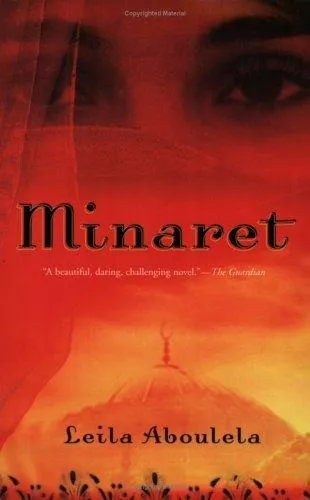
Week 5: A Number Left Uncalled
Read this week: Chapters 17–19, 21.
Now the past writes to her. A disgraced family is kept alive by women's friendships made long before the fall; a phone number is dropped into a handbag and not called; then a letter arrives from London asking for her. Anwar re-enters her life as a frightened man who is calculating, needy and sincere at once — exile purifies nobody — and within a few pages the two of them are negotiating the exact terms of a love in which she would keep nothing of her name. The step walks us through the arithmetic of it: who holds the language, who holds the passport, who has standing to complain, who has already given up a conviction at the border. He names them equals, and the word works like a door quietly closing, because being unknown is not the same as being seen. Meanwhile the novel keeps two other things beside this love: a photograph of her parents in good health, and a prayer someone carved into a mosque bench, reaching her with more force than the friend she phoned about it. This step asks us to hear how consolation is usually written before we need it, and to ask what any of us would surrender to be loved by someone who had stopped being curious about us. Hold the letter and the bench in one hand.
Week 5 is for paid members
This week's 16 passages from Chapters 17–19, 21, with the commentary, lineage and criticism on each, are for paid members. The introduction to every week is free on the book's main page.
Questions for the week
- How should criticism weigh the tortured man's suffering against Najwa's loneliness without turning pain into a competition? One analysis explicitly argues that suffering becomes a competition the tortured man wins, disqualifying Najwa's loneliness. The ethical question of how to compare these injuries remains unresolved.
- Is Anwar's secular political reason defeated by Najwa's faith, or do both remain forms of exile that the novel refuses to rank? Criticism reads Anwar as a flag-burning socialist turned asylum seeker, a mocker of prayer, and a letter-writer seeking contact. It has not settled whether the novel treats his politics as exhausted or as another failed route to belonging.
Passages quoted from Leila Aboulela, Minaret (Grove Press, 2005), for criticism and commentary.