
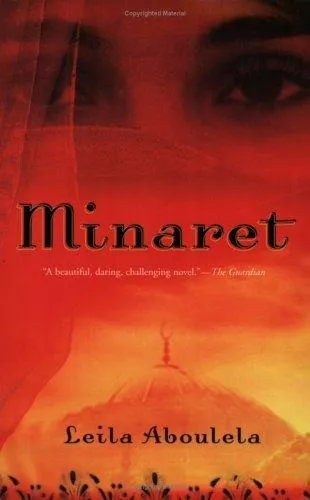
Week 1: The Minaret Over the Low Ceiling
Read this week: Chapters 1–3.
Begin where the book begins: a woman in London under a low ceiling, and above the roofs a minaret she can still see. She has accepted a sentence and she is still hungry. That contradiction — a verdict and an appetite carried in one body — is the engine of everything that follows, and this first step walks straight into it. Only a few pages in, the novel turns back to Khartoum and shows us the house that made her: a father married into an old and wealthy family, a mother who rules without holding any office, a brother and sister raised in one house and wanting opposite lives, a rolled-up car window on a hot street where privilege hands a girl a freedom that is still on loan from men. In between come the small exposures of a life abroad: a stranger's accent guessed wrong on a London street, a schoolmate's white cotton tobe that makes a privileged girl feel her own thinness, a sad song understood for no reason at all. Notice how little drama there is. Nobody announces a fall. Love and money arrive fused; opinions arrive as inherited furniture; a girl takes sides in a family ledger she was never shown. What the step asks of us is patience with the ordinary, and the willingness to read privilege as something borrowed, not owned. Keep the ceiling and the minaret both in view, and ask what you carry that was handed to you, and who paid for it.
Week 1 is for paid members
This week's 15 passages from Chapters 1–3, with the commentary, lineage and criticism on each, are for paid members. The introduction to every week is free on the book's main page.
Questions for the week
- Is Najwa's downward mobility a fall, a spiritual ascent, or a stalled middle state? Criticism reads her as accepting a low ceiling while seeing a minaret, as descending through execution and illness, and as suspended between two destinations. It has not settled the novel's final judgment on her trajectory.
Passages quoted from Leila Aboulela, Minaret (Grove Press, 2005), for criticism and commentary.