
Jamal Awil
Editor of The Theoria. Specialist, Multilingual Communications, Osseo Area Schools. Former student editor, Runestone Journal (Hamline University). Runs Polymath Review. Minneapolis.
Home Boy
 H. M. Naqvi, 2009. Three young Pakistani men in New York go overnight from boulevardiers to a suspected sleeper cell.
Minaret, Week 2: The Gate the Watchman Opens
 The house of the last step now meets a state. A government lets students print what they like while quietly keeping a file on them, and a young woman learns that being noticed is one of the ways you become endangered.
The Moor's Account, Week 3: The Whip and the Aunt's Hands
 Step two showed us the machinery out in the open air — the nodding, the counting, the writing down. This week the book moves indoors, into the rooms where a boy actually grows up, and the question changes.
The Reluctant Fundamentalist
 Mohsin Hamid, 2007. A Princeton-educated Pakistani tells a silent American in a Lahore café how the American Dream soured after 9/11.
Minaret, Week 1: The Minaret Over the Low Ceiling
Begin where the book begins: a woman in London under a low ceiling, and above the roofs a minaret she can still see. She has accepted a sentence and she is still hungry.
The Moor's Account, Week 2: A Governor's Nod, a Pebble of Gold
Last week's question was who holds the pen. This week, how far that pen reaches.
The Girl in the Tangerine Scarf
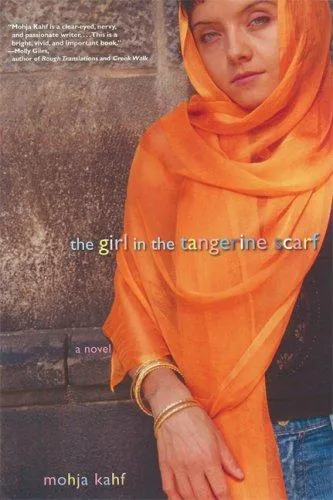 Mohja Kahf, 2006. Growing up in a devout 1970s Indianapolis Muslim community, from rigid certainty to a more capacious faith.
The Moor's Account, Week 1: Three Clocks at Once
Mustafa opens with God, with the line of his father, and with three clocks running at once: a sacred calendar, the count of his own years, and the years of the men who own him. Before any ship leaves shore, we are asked to notice something strange — a man speaking to us from a room that is
Minaret
Leila Aboulela, 2005. A secular Sudanese woman, exiled to London, chooses faith and the hijab: the veil as agency, not oppression.
The Moor's Account
Laila Lalami, 2014. The imagined memoir of Estebanico, the Moroccan survivor the official chronicle gave a single line.