
Week 10: Estebanico Dies at Hawikuh
Read this week: Chapters 22–25.
We began with three clocks and a father's name, and we end with a disappearance. This week a man who has lost name, country, companions and labor hands his child a story in a language he learned under pressure, and that inheritance outlives the empire that owns his body. A father's exile turns his child's voyage home in the opposite direction into its own kind of bearing, so a journey nobody can make becomes a wish that can still be passed on. Then the last move, and it is not a death: the empire is made to believe that its slave Estebanico died goldless at a city the expedition never reached. When no master comes to claim him, he walks free, and the tale that buried him is the last property he owned outright. Nothing here pretends the record will be completed. Nobody holds the whole of what happened; each of us carries a piece and speaks it into ears that will edit it. So the final question is not about Mustafa. It is the question the whole book has been circling: what will you do with the one account only you can give, and who are you teaching to carry it after you can no longer correct them?
Week 10 is for paid members
This week's 11 passages from Chapters 22–25, with the commentary, lineage and criticism on each, are for paid members. The introduction to every week is free on the book's main page.
Questions for the week
- Does Mustafa's staged death of Estebanico constitute liberation or a deeper submission to empire's demand for a usable story? The criticism reads the false report both as protective cunning and as a concession to the fable empire wants. It remains unsettled whether the novel presents this as the enslaved narrator's ultimate agency or as evidence that even freedom must be written in the master's genre.
- Is the novel's resistance achieved through the content of Mustafa's counter-story or through its proliferation of storytelling forms and voices? Some analyses stress the narrated self and the refusal of one true story; others stress the many genres and tales that travel between cultures. The criticism has not resolved whether the novel's politics lie in what it says or in how many tellings it sets against the archive.
- Does the novel's Islamic devotional language make its counter-history theological or merely cultural? Analyses name God and the father-line, a man of three faiths, a translated inheritance, a father's verse, and converts selling empire's faith. The criticism has not decided whether the novel's Islamic frame is a structural alternative to colonial Christianity or a cultural marker within a secular historical narrative.
- Does the narrator's use of the conqueror's language enable resistance or enact a second dispossession? Renaming severs language and lineage, yet the Arabic name survives, recognition crosses tongues, and the inner life persists in the gap between record and memory. Criticism has not resolved whether Mustafa's Spanish narration is a triumph of translation or a continuing subjection.
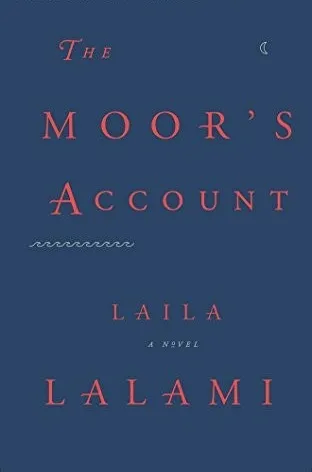
Passages quoted from Laila Lalami, The Moor's Account (Pantheon, 2014), for criticism and commentary.